
Can an ingredient scanner detect allergies?
It can surface listed allergen and ingredient information, but it should not replace the package label, manufacturer guidance, or medical advice for a serious allergy.

Ingredient guide
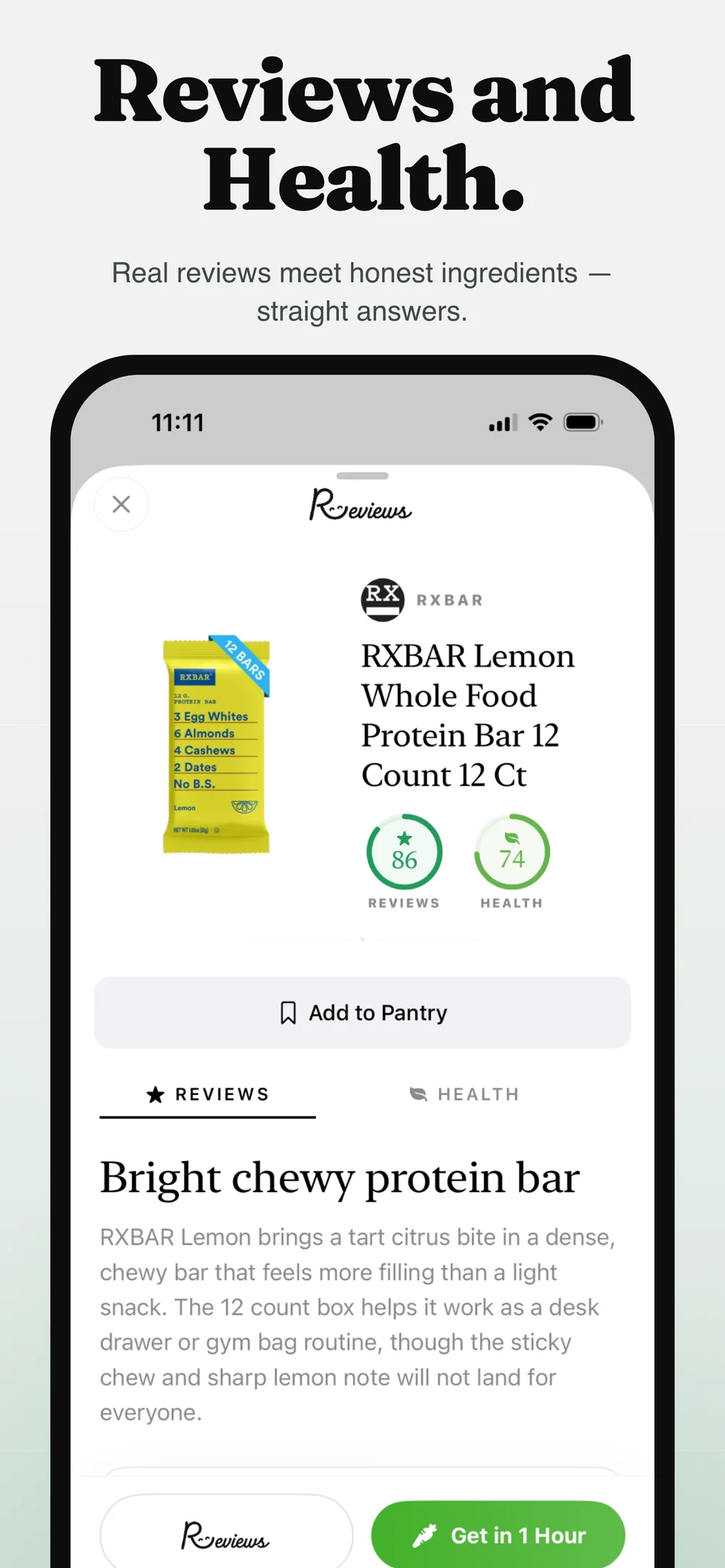
Ingredient lists are useful evidence, but they are not a diagnosis. Reviews connects ingredient names to the product, the nutrition panel, category context, scoring drivers, and the source status behind the analysis.
Bottom line
At a glance
Specific differences, without pretending one app fits every shopper.
The interface should make missing evidence visible.
The same ingredient can play a different role in different formulations.
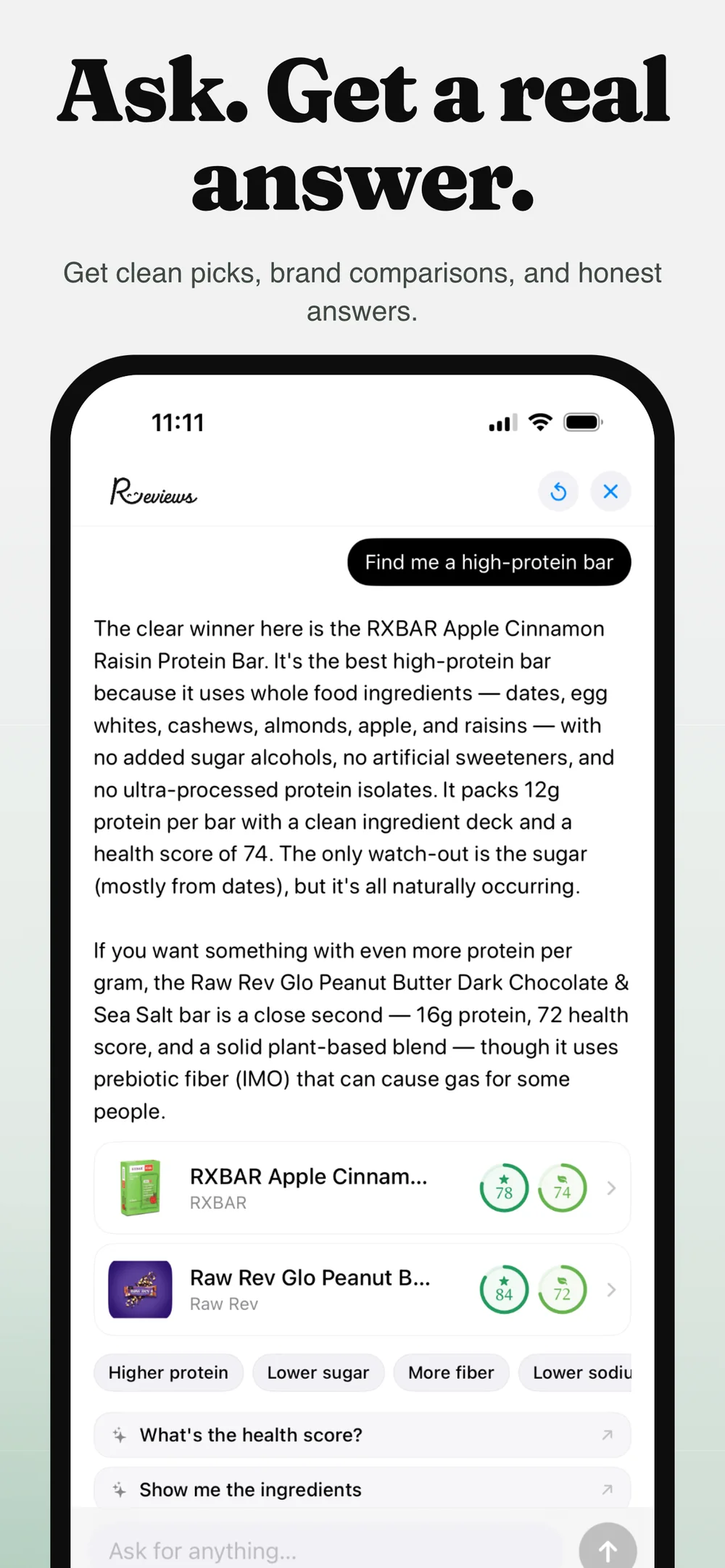
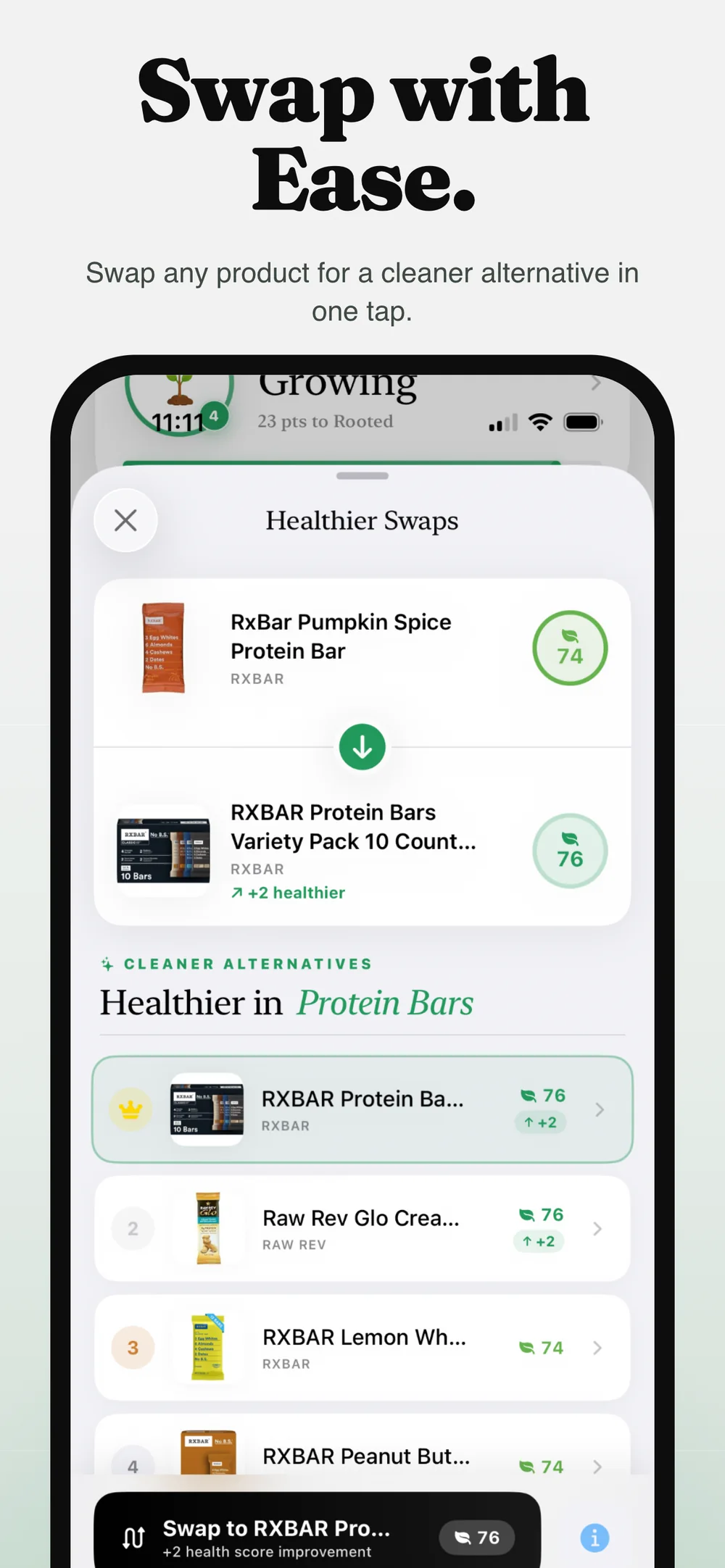
A label explanation is more useful when it leads to a fair comparison.
Reviews reads the ingredient panel alongside available nutrition facts, category, processing signals, package claims, and product evidence. It does not treat one unfamiliar word as proof that an entire product is harmful.
A scanner should tell you whether it matched an exact UPC, read a label image, used a trusted open-data record, or lacks enough information. Reviews keeps those evidence states attached to the scorecard.
Labels change and databases make mistakes. Every public Reviews page links to data-source and correction policies so product evidence can be challenged and updated.
Questions
It can surface listed allergen and ingredient information, but it should not replace the package label, manufacturer guidance, or medical advice for a serious allergy.
A score is withheld when the ingredient or nutrition evidence is not reliable enough to support the analysis.
No. Length alone does not establish nutritional quality or safety. The formulation, quantities, nutrition panel, category, and evidence all matter.
Sources
Available now
Scan the barcode, inspect both scores, and compare the shelf before it hits your cart.